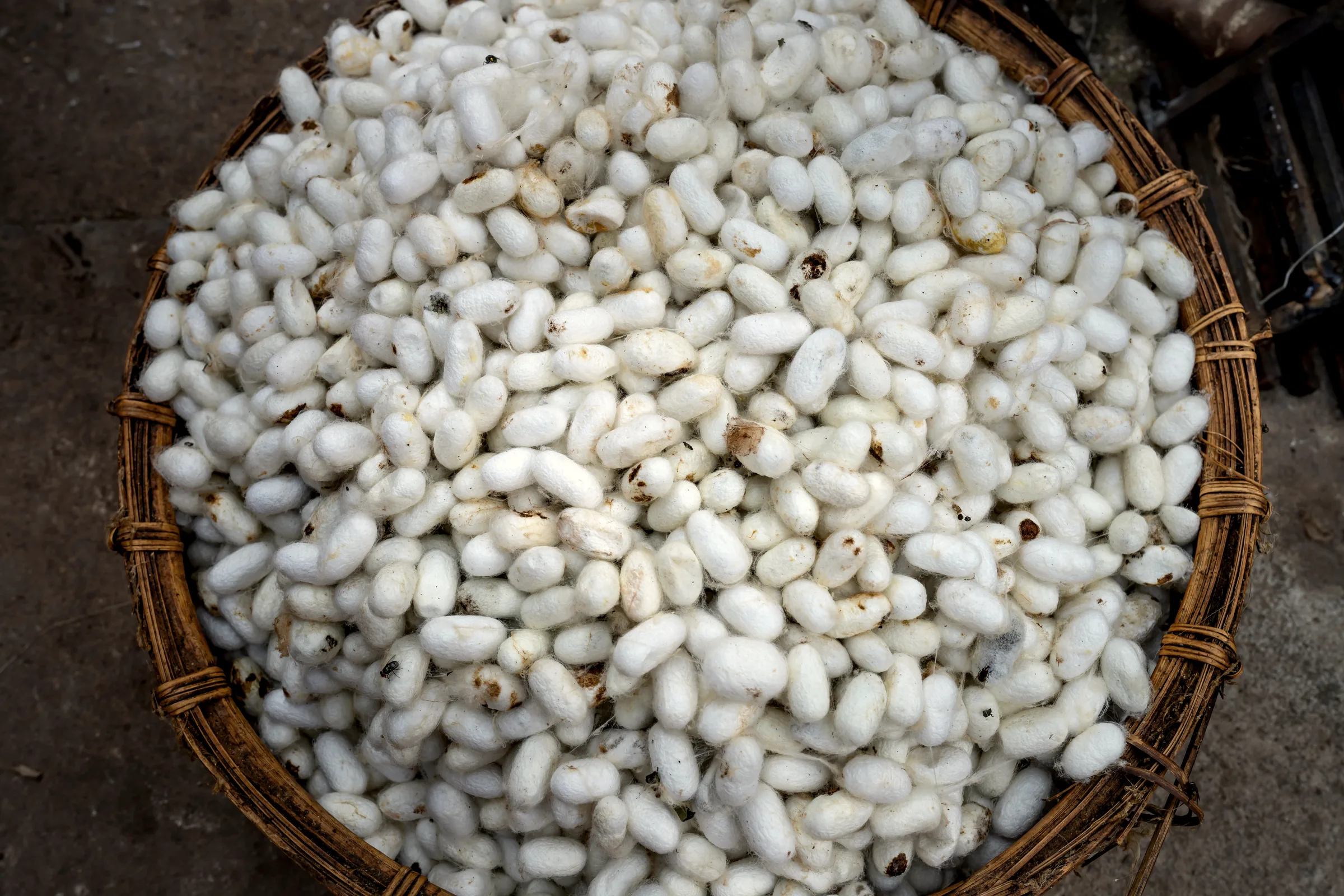
Cocoon to filament
The reeling process, which explains the entire trade in about four minutes.
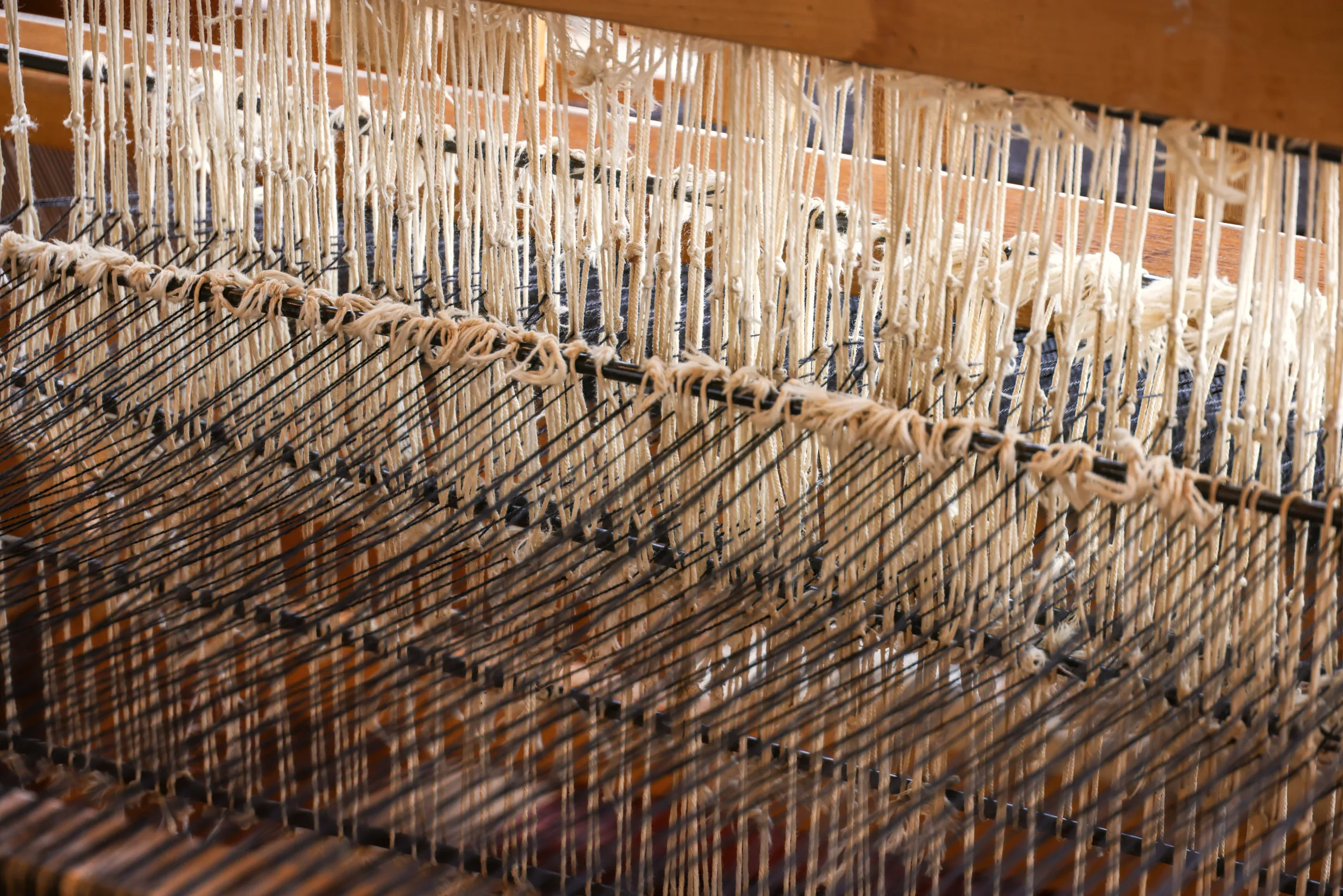
A single cocoon yields around nine hundred metres of unbroken filament. Every economic and diplomatic consequence of silk follows from that one absurd fact.
The reeling process, which explains the entire trade in about four minutes.
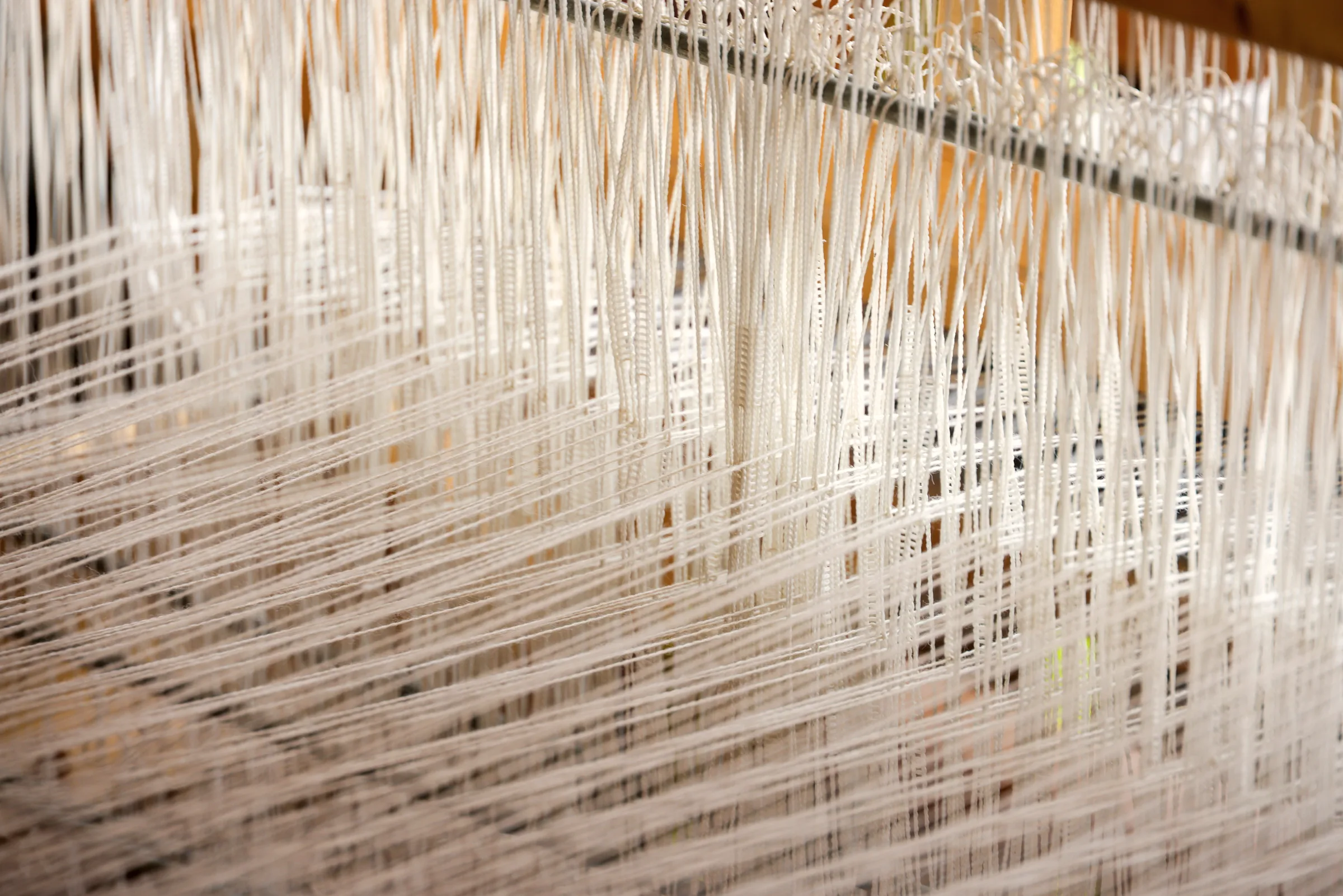
Warp, weft, and a pattern that has to be planned before a thread is laid.
The cloth comes out green and turns blue in the air. Nobody is ever ready for it.
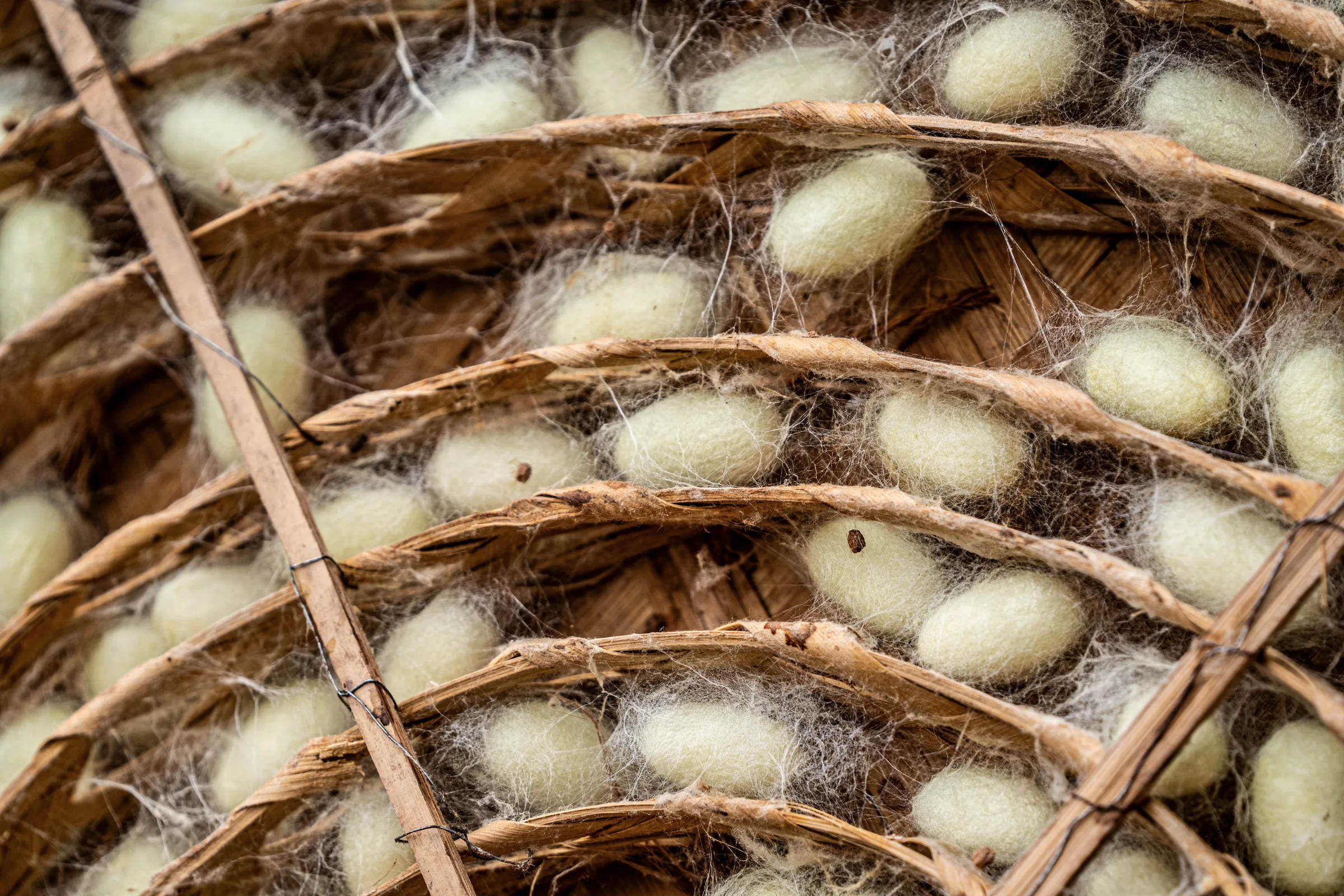
Silk is a single continuous filament. Not a fibre to be spun like cotton or wool — one thread, unbroken, several hundred metres long, produced by an insect that has been domesticated so completely it can no longer survive without people.
Once you have watched it reeled off a cocoon in warm water, the rest of the history follows on its own: why it was worth carrying across a continent, why the technique was a state secret for centuries, and why a length of it was once a reasonable way to pay a soldier.
The dye studio in the afternoon is the hands-on half. You fold, bind and clamp the cloth to decide where the colour cannot reach, and you will not know whether you were right until it comes out of the vat.
Indigo is not soluble in water until it is chemically reduced, and in that state it is yellow-green. Oxygen converts it back, so the colour develops on the line rather than in the vat. It is the best moment of the day.
Usually yes — it needs rinsing and drying, which the studio handles while you have lunch. In humid weather we post it on.
Not on this day. Hangzhou's tea deserves its own morning and we would rather do silk properly than half of both.
Yes. Gloves and aprons are provided, but wear something you do not mind.
Only if you want them. The day is normally private to your party; we also run it as a small group when travellers ask to share, and we will tell you which applies to your dates.