Molten metal being poured into a small ingot mould
The forge
Ingot to wire to sheet, in about the order you would guess and none of the speed.
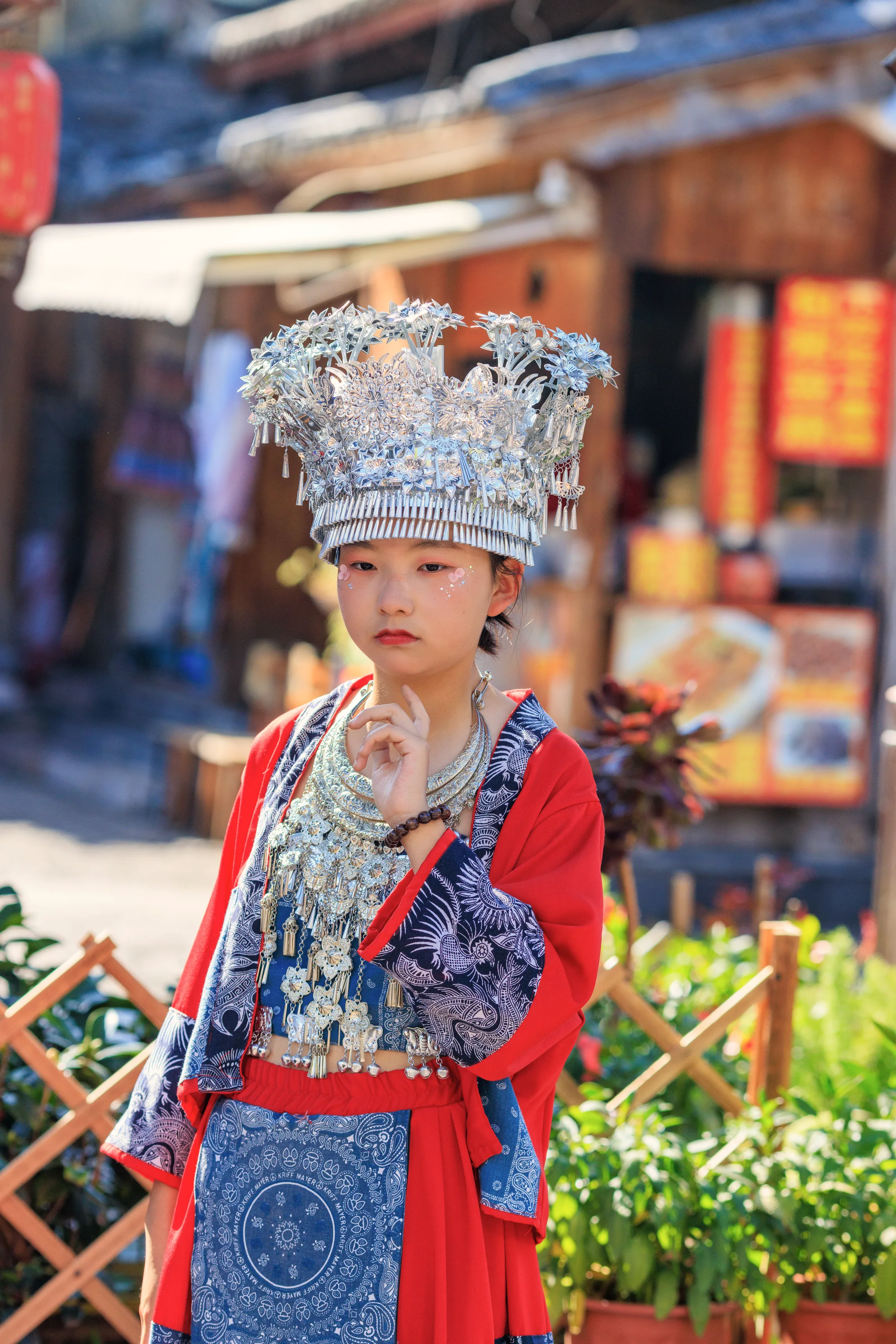
A full Miao festival headdress can carry several kilograms of silver, and a family will spend years assembling one. It is a bank account, a genealogy and a statement of intent, worn on the head.
Ingot to wire to sheet, in about the order you would guess and none of the speed.
Hundreds of small hammer strikes, each one deliberate, none of them undoable.
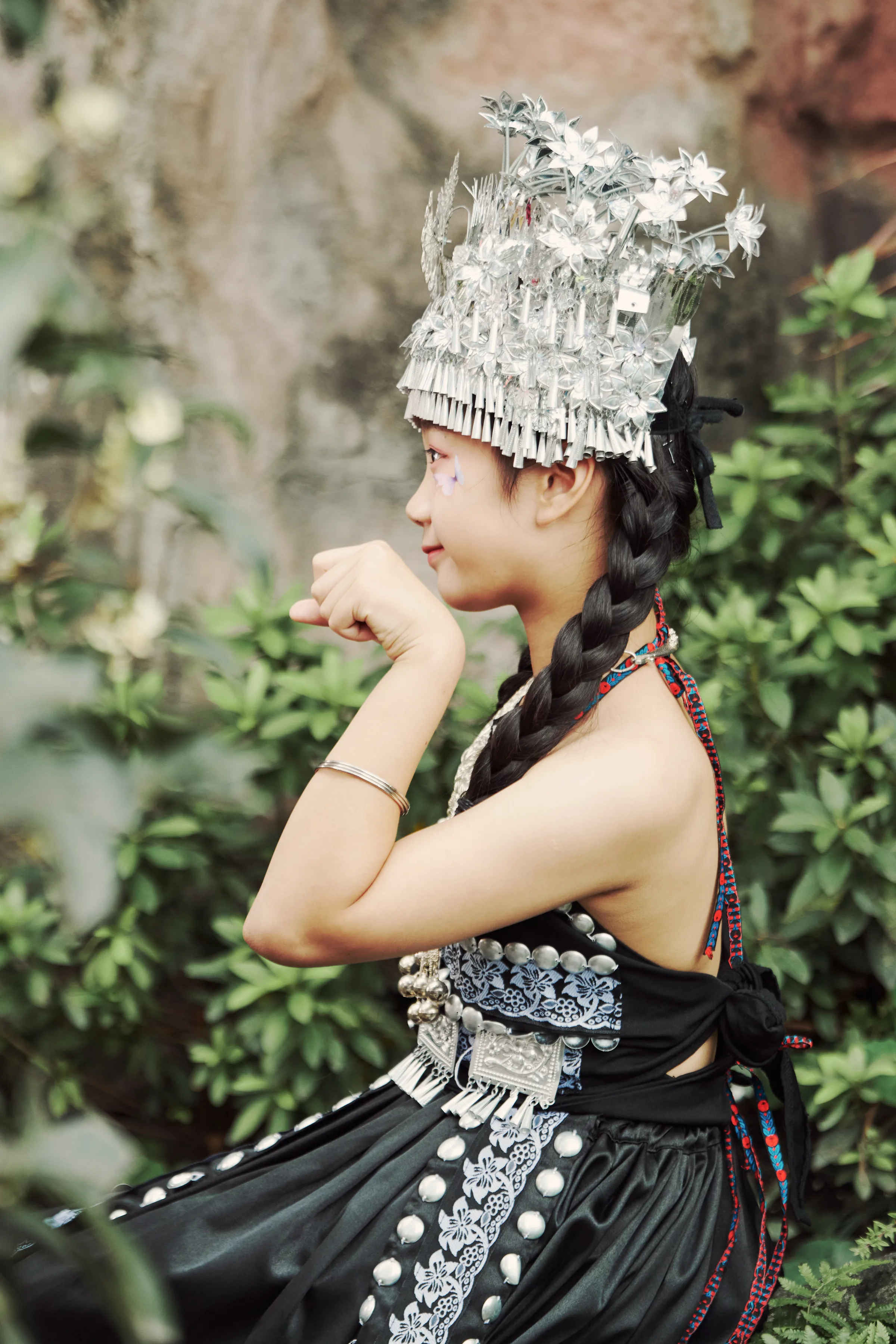
Not decoration. A record of who a family is and what it has managed.
The silver is not ornament in the way that word usually works. A headdress records a family — what it has accumulated, over how long, and what it intends to signal at the point a daughter marries.
Which means the weight is the message. Several kilograms of worked silver represents years of a household’s surplus, converted into something wearable and displayed once or twice a year in front of everyone whose opinion counts.
At the forge you get the physical version of that argument. Casting, drawing, raising, chasing — every stage is slow, none of it is reversible, and after a day of it the headdress in the corner reads very differently.
A small chased piece — usually a pendant or a simple band. It will be recognisably handmade, which is the point.
The metal for your own piece is included. If you commission something larger or buy finished work, that is between you and the smith, and we will tell you what is fair.
There is heat and there are hammers, so it is supervised throughout and children need to be old enough to follow instructions — around twelve.
No. This is metalwork, at a forge, and deliberately sits apart from the dye and pipe-reed circuits that other operators run.
Only if you want them. The day is normally private to your party; we also run it as a small group when travellers ask to share, and we will tell you which applies to your dates.